
Feasibility Study Carbon Project in S South
Tanggal : 29 April 2026
The Feasibility Study for the Carbon Project in the S South region aims to assess the viability of developing a land-based carbon project, particularly within peat swamp forest ecosystems and tropical wetlands that possess high carbon storage potential. This study serves as an initial step to identify climate change mitigation opportunities through the reduction of greenhouse gas emissions and the enhancement of carbon stocks via conservation, restoration, and sustainable landscape management practices.
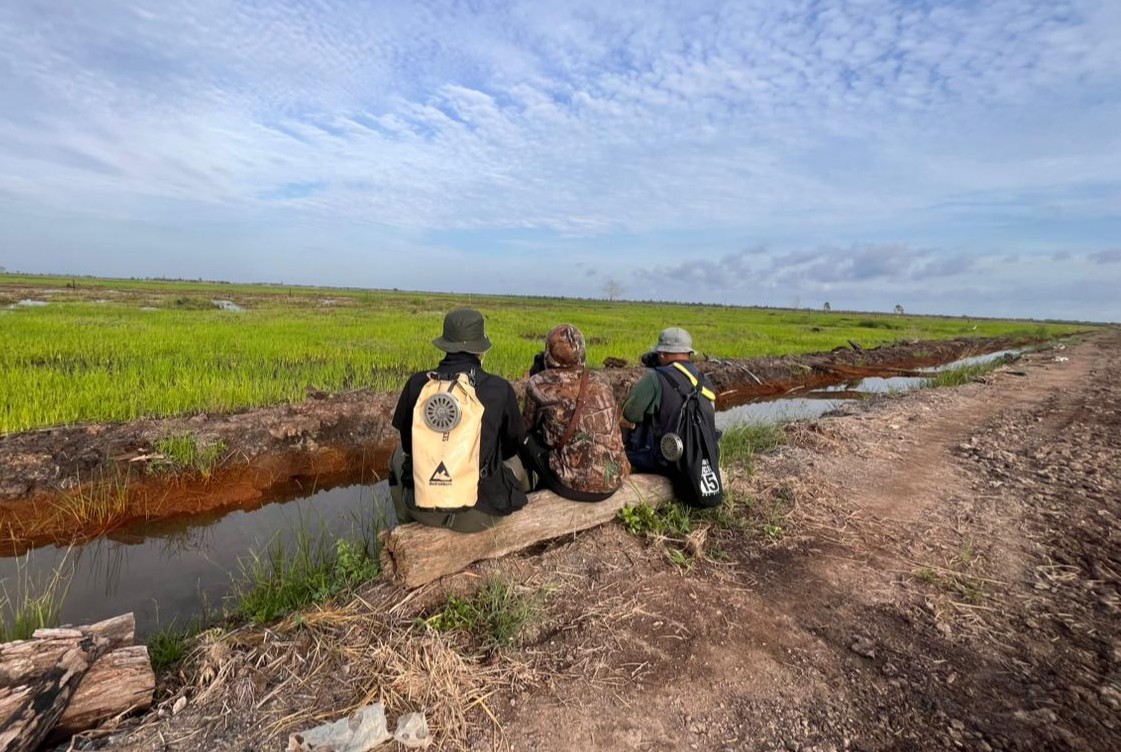
The study area encompasses landscapes characterized by deep peat deposits, canal networks, and a mosaic of land cover types, including secondary forests, shrublands, and degraded areas. These conditions make the area highly suitable for carbon-based interventions such as peatland rewetting, revegetation, and the protection of remaining forest cover.
The assessment covers several key components: (1) biophysical analysis to identify existing carbon stocks, emission sources, and opportunities for carbon stock enhancement; (2) spatial analysis to define project boundaries, land cover, and land-use change dynamics; (3) socio-economic analysis to understand local community conditions, dependence on natural resources, and the potential impacts and benefits of the project; (4) institutional and governance analysis to evaluate project readiness, including legal aspects, land tenure, and stakeholder engagement; and (5) biodiversity assessment through flora and fauna inventories as indicators of ecosystem condition.
The flora and fauna assessment is conducted to evaluate habitat quality, ecosystem integrity, and to serve as indicators of the effectiveness of planned carbon interventions. Flora inventories include species composition, vegetation structure (seedlings, saplings, poles, and trees), and the identification of key or endemic species that play important roles in carbon storage and peatland ecosystem stability. Meanwhile, fauna assessments focus on indicator groups such as mammals, birds, herpetofauna, and selected insect taxa that are sensitive to habitat changes. Their presence, abundance, and distribution patterns are used as indicators of ecosystem health and levels of environmental disturbance.
Beyond serving as ecological indicators, flora and fauna data are also used to identify High Conservation Value (HCV) areas and biodiversity potential that can be enhanced through the carbon project. Thus, the project is expected not only to contribute to emission reductions but also to biodiversity conservation and the enhancement of ecosystem services as a whole.
The study further evaluates the financial feasibility of the project by estimating potential carbon credits that can be generated under internationally recognized standards, along with a cost–benefit analysis over the long term. Project risks—including peatland fires, policy changes, and social challenges—are also assessed to develop appropriate mitigation strategies.